Last verified: March 2026
Before Oaksterdam: Jeff Jones and the OCBC
The story of Oaksterdam begins before Oaksterdam existed. In 1995, Jeff Jones co-founded the Oakland Cannabis Buyers Cooperative (OCBC) — a medical cannabis dispensary that operated by bicycle delivery. Jones was not some counterculture dropout. He was a quiet, determined organizer who believed sick people had a right to cannabis. The OCBC's legal battles went all the way to the United States Supreme Court (United States v. Oakland Cannabis Buyers' Cooperative, 2001), where the Court rejected a medical necessity defense under federal law. Jones lost the case but proved something: Oakland was willing to fight for cannabis all the way to the highest court in the land.
The Timeline
Richard Lee Arrives in Oakland
Richard Lee — a Texan who had been paralyzed from the waist down after an accident and used cannabis to manage spasticity and pain — arrived in Oakland from Houston. He saw a Broadway corridor full of empty storefronts in a city that had just decriminalized medical cannabis under Prop 215 (1996). Where others saw blight, Lee saw opportunity.
Lee Fills Broadway
Lee opened a string of cannabis businesses along Broadway: Big Top (a dispensary), Bulldog Coffeeshop, and SR-71 (named after the Lockheed spy plane). He was filling empty storefronts with functioning businesses, paying rent, employing people, and generating tax revenue in a corridor that had been declining for years. The stretch of Broadway around his businesses became known informally as "Oaksterdam" — Oakland's Amsterdam. The name stuck.
He was filling empty storefronts with functioning businesses, paying rent, employing people, and generating tax revenue in a corridor that had been declining for years.
On Richard Lee's transformation of Oakland's Broadway corridor
Measure Z Passes with 65%
Measure Z passed with 65% of the vote, making adult cannabis use the lowest law enforcement priority in Oakland. This was not legalization — cannabis was still illegal under state and federal law — but it told Oakland police to focus on actual crimes. The margin was enormous and signaled that Oakland was ready for the next step.
Oaksterdam University Opens
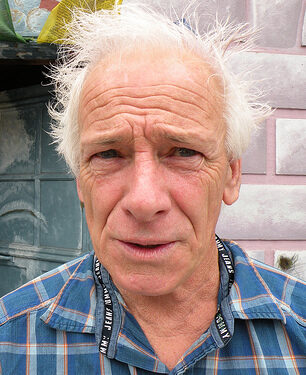
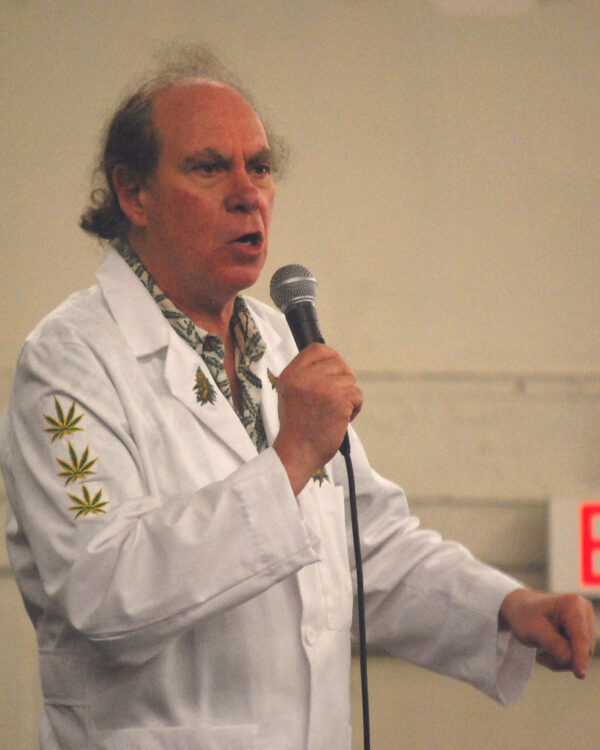
Lee founded Oaksterdam University at 1600 Broadway — a 30,000-square-foot campus with a grow lab, auditorium, and classroom space. It was the first cannabis college in America. The faculty included legends: Dennis Peron (father of medical cannabis, co-author of Prop 215), Ed Rosenthal (the Guru of Ganja, 2+ million books sold), and Jeff Jones (OCBC). Courses covered cultivation, law, business, and activism. Oaksterdam University was not just a school — it was a statement that cannabis was a legitimate profession.
Proposition 19 — Lee's $1.3 Million Bet
Lee wrote and bankrolled Proposition 19, California's first ballot measure to legalize recreational cannabis. He spent $1.3 million of his own money on the campaign. Prop 19 failed, receiving 46.5% of the vote — close, but not enough. The loss was devastating for Lee personally and financially. But the campaign's impact was immediate: it forced Sacramento to pass SB 1449, which reduced simple cannabis possession from a misdemeanor to an infraction. The result was an 89% reduction in cannabis arrests statewide. Prop 19 also became the blueprint for the successful legalization campaigns in Colorado and Washington in 2012.
The Federal Raid
Four federal agencies — DEA, IRS, U.S. Marshals, and the Department of Interior — raided Oaksterdam University. Agents broke down the door, seized plants, records, and equipment, and temporarily shut down the campus. The raid was a message: the federal government could strike at any time, regardless of state law. No charges were ever filed. The raid was pure intimidation. Dale Sky Jones, Lee's business partner and then-chancellor, took over operations and kept the university alive.
The Aftermath
Lee stepped back from Oaksterdam. The financial toll of Prop 19 and the emotional toll of the raid were immense. He eventually relocated to Houston. But the movement he had built did not stop. The alumni he had trained went on to lead legalization campaigns across the country. Prop 64 passed in California in November 2016 — the law Lee had spent his fortune trying to create six years earlier.
California Legalization Takes Effect
When legal adult-use sales began on January 1, 2018, the first gram sold in California was at Harborside — another Oakland institution, blocks from the Broadway corridor Lee had built. The city he had chosen 20 years earlier, the city where he had opened his first dispensary, the city whose university had trained the people who made it possible, was the city that sold the first legal gram.
Richard Lee Dies
Richard Lee died on July 27, 2025, in Houston, at age 62, from cancer. He left behind a legacy that can be measured: 100,000+ alumni from 116 countries. Faculty who helped write Prop 64. A university that still operates. A Broadway corridor that went from empty storefronts to the heart of American cannabis reform. And a proposition that failed at the ballot but succeeded in changing everything.
The Numbers
Oaksterdam University Today
Oaksterdam University still operates at 1600 Broadway, though the campus has contracted from its peak. Dale Sky Jones served as chancellor after the raid. The university offers courses in cultivation, cannabis law, business operations, and activism. Its alumni network spans every legal state and dozens of countries. Many of the people who run California's cannabis industry — from cultivators to compliance officers to equity program administrators — passed through its doors.
The Broadway Corridor Today
The stretch of Broadway that Lee transformed is still the heart of Oakland's cannabis scene. Cookies Oakland now occupies the former Oaksterdam University building at 1776 Broadway — Berner's East Bay flagship in the building where Lee taught 30,000 students. Two generations of cannabis history, one address. The area around 19th Street and Broadway remains walkable, BART-accessible, and loaded with cannabis landmarks.
Why It Matters
Richard Lee was not from Oakland. He was a wheelchair-using Texan who chose a struggling city with empty storefronts and a population that was tired of the War on Drugs. He filled those storefronts with businesses. He built a university. He spent $1.3 million of his own money on a proposition that lost. He was raided by four federal agencies who never filed charges. He moved back to Texas. He died at 62.
But the 100,000 people he trained went everywhere. Colorado. Washington. Oregon. Massachusetts. Canada. Germany. The legalization wave that swept the world in the 2010s and 2020s was seeded, in large part, by a school on Broadway in Oakland. Every state that legalized after 2010 borrowed from the Prop 19 playbook. Every cannabis business that hired an Oaksterdam alum carried his influence. The storefronts he filled are still full.
When you walk down Broadway in Oakland, you are walking through one man's vision. It worked.
Learn More
For in-depth cannabis education, dosing guides, safety information, and research summaries, visit our partner site TryCannabis.org
Related on this site: California Cannabis Law, Cookies & Bay Genetics, First Cannabis Equity Program.